Regulatory Impacts on No-Deposit Promotions for Live Casino Games in Sweden
Avery Vogel · Sep 7, 2026
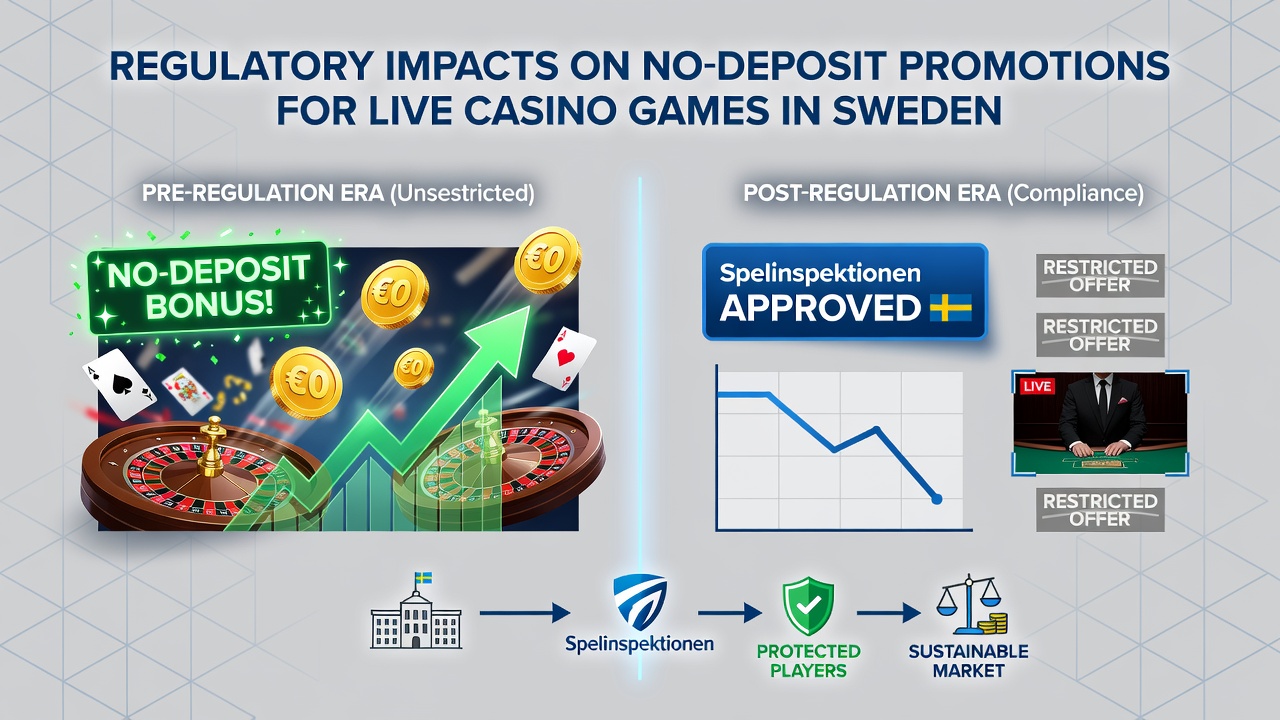
Regulatory Impacts on No-Deposit Promotions for Live Casino Games in Sweden
Sweden maintains a tightly controlled online gambling market under the Gambling Act that took effect in 2019, and this framework directly shapes how operators structure no-deposit promotions for live casino games. The Swedish Gambling Authority oversees licensing and compliance, requiring all promotional offers to meet strict transparency and consumer-protection standards before they reach players. No-deposit bonuses, which grant free spins or small cash amounts without an initial deposit, fall under these rules because they count as marketing incentives that must not encourage excessive play. Data from regulatory filings show that operators must cap wagering requirements and clearly disclose any time limits, while live casino titles such as blackjack and roulette remain subject to the same bonus-conversion formulas applied to slot games.
Core Rules Governing Bonus Offers
Current legislation limits each player to one welcome bonus package across all game categories, and this single-bonus rule extends to no-deposit offers tied to live dealer tables. Operators cannot re-trigger free spins or cash credits once the initial promotion expires, a restriction that applies equally to roulette, baccarat, and poker variants streamed in real time. Figures released by the authority indicate that more than 80 percent of licensed platforms adjusted their no-deposit terms within the first two years after the Act came into force, primarily by shortening validity periods and lowering maximum withdrawal caps on bonus winnings. Those adjustments reduced the average bonus value offered on live casino platforms from the equivalent of 50 euros to roughly 25 euros in many cases, according to aggregated market reports.
Enforcement Patterns and Compliance Costs
Inspections conducted throughout 2024 and 2025 revealed that several operators faced fines ranging from 100,000 to 500,000 Swedish kronor for failing to separate bonus funds from real-money balances in live casino environments. These enforcement actions centered on software glitches that allowed players to wager bonus credits on table games without proper tracking, prompting the authority to mandate additional audit trails. Compliance teams at larger sites now allocate dedicated staff hours each month to review promotional mechanics, a cost that has risen steadily since the initial licensing round. Smaller operators have responded by partnering with third-party providers that specialize in bonus-management modules certified for Swedish standards, thereby shifting some technical burden outside their own development teams.
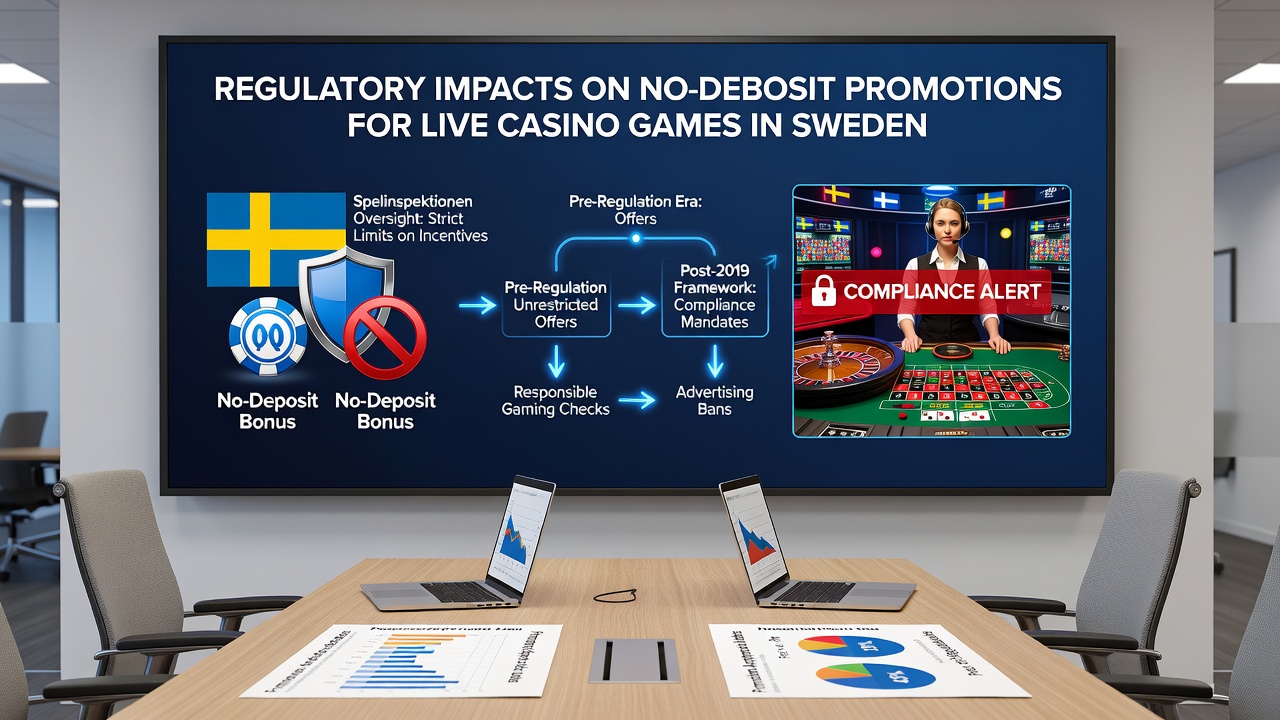
Observers note that the emphasis on responsible gambling features has also influenced how no-deposit promotions appear on live casino lobbies. Every bonus must now link directly to a player’s self-exclusion status and deposit-limit settings, ensuring that individuals who have set restrictions cannot accidentally activate free credits. This integration requirement has led platforms to redesign their user interfaces so that promotional banners remain inactive until a player confirms their account settings. Research compiled by European gaming associations shows similar interface changes appearing across multiple regulated markets, although Sweden’s implementation timeline remains among the most compressed.
Effects on Live Casino Game Providers
Live casino suppliers have adapted their game certification processes to accommodate bonus-related parameters required by Swedish law. Each title submitted for approval must include configurable settings that let operators restrict bonus play on specific tables or limit the contribution of table games toward wagering targets. These technical specifications add development time and testing cycles, yet they allow providers to maintain a single game version across several European jurisdictions. Market data indicate that certified live blackjack and roulette titles increased by 12 percent between 2023 and 2025, partly because suppliers streamlined their certification pipelines to meet the authority’s documentation demands. Operators report that the added certification steps have not slowed game release schedules when planned well in advance, although last-minute regulatory queries can still delay launches by several weeks.
Upcoming Review Cycle in September 2026
Preparations for the next comprehensive review of the Gambling Act are already underway, with stakeholder consultations scheduled to begin in September 2026. The authority has indicated that bonus structures, including no-deposit promotions for live casino products, will form one chapter of the evaluation. Industry participants expect discussions around possible adjustments to maximum bonus values and the treatment of bonus winnings from table games. External analyses from research institutions in Canada and Australia suggest that jurisdictions with similar licensing models have introduced tiered bonus caps based on game volatility, and Swedish regulators have referenced such comparative studies in preliminary briefing documents. Any resulting amendments would likely take effect no earlier than 2028, giving operators a two-year window to adjust marketing strategies and technical integrations.
Player Behavior and Market Statistics
Statistics published by the authority show that the share of active accounts claiming no-deposit offers on live casino sections has remained stable at approximately 15 percent since 2022. Average session lengths for players using these promotions have not increased, while overall problem-gambling flags tied to bonus-related activity have declined slightly. These figures suggest that the combination of stricter terms and improved tracking tools has produced measurable effects without eliminating promotional activity. Cross-border comparisons published by international trade groups place Sweden’s no-deposit redemption rate below that of several less restrictive European markets, yet above the rates recorded in jurisdictions that prohibit such offers entirely.
Conclusion
The regulatory environment in Sweden continues to shape every aspect of no-deposit promotions attached to live casino games, from initial offer design through final withdrawal processing. Operators that maintain certified systems and transparent terms meet ongoing compliance expectations, while upcoming policy discussions in September 2026 may introduce further refinements. Market participants monitor these developments closely because any shift in bonus parameters can alter both marketing budgets and technical requirements across the entire live casino segment.