Regulatory Shifts Shaping Deposit-Free Incentives for Table Games in Sweden's Licensed Sector
Avery Vogel · Oct 5, 2026
Regulatory Shifts Shaping Deposit-Free Incentives for Table Games in Sweden's Licensed Sector
Sweden's licensed gambling market has undergone several adjustments in recent years as Spelinspektionen refines its approach to player incentives, and deposit-free offers for table games represent one area where these changes have become particularly visible. Operators must now navigate updated requirements that affect how no-deposit bonuses can be structured, promoted, and applied to games such as blackjack, roulette, and baccarat. These rules aim to maintain consumer protections while allowing licensed sites to continue offering competitive features within a tightly controlled framework.
Background on Sweden's Licensing Framework
The 2019 re-regulation of the Swedish market established a state-supervised system that requires all operators targeting Swedish players to hold a local license, and this foundation continues to evolve through periodic updates to marketing and bonus guidelines. Data from official records shows that the number of active licenses has stabilized, yet the conditions attached to those licenses have grown more specific regarding incentive types. Table games, which generate a notable share of revenue at many sites, fall under closer scrutiny because of their structural characteristics and player engagement patterns.
Deposit-free incentives allow new users to receive playing credits or free spins without an initial financial commitment, but regulators have introduced clearer distinctions between how these offers may apply to slot machines versus table game categories. Observers note that the distinctions emerged from ongoing reviews of player behavior data and compliance reports submitted by license holders.
Key Regulatory Developments Through 2025
By mid-2025, Spelinspektionen had circulated draft amendments that addressed bonus wagering requirements, game weighting, and time limits on deposit-free credits, and these drafts received input from industry associations as well as consumer protection groups. The final versions incorporated feedback that emphasized transparency in how table game contributions count toward bonus completion. Figures released by the authority indicate that average wagering multiples for table games had previously ranged higher than for other categories, prompting adjustments to create more uniform standards across game types.
One study conducted by a Nordic research institute revealed that clearer weighting rules correlated with reduced player complaints about unclear terms, and operators began adapting their platforms in anticipation of stricter enforcement. The changes also required improved tracking systems so that regulators could verify whether incentives remained within permitted parameters.
Changes Taking Effect in October 2026
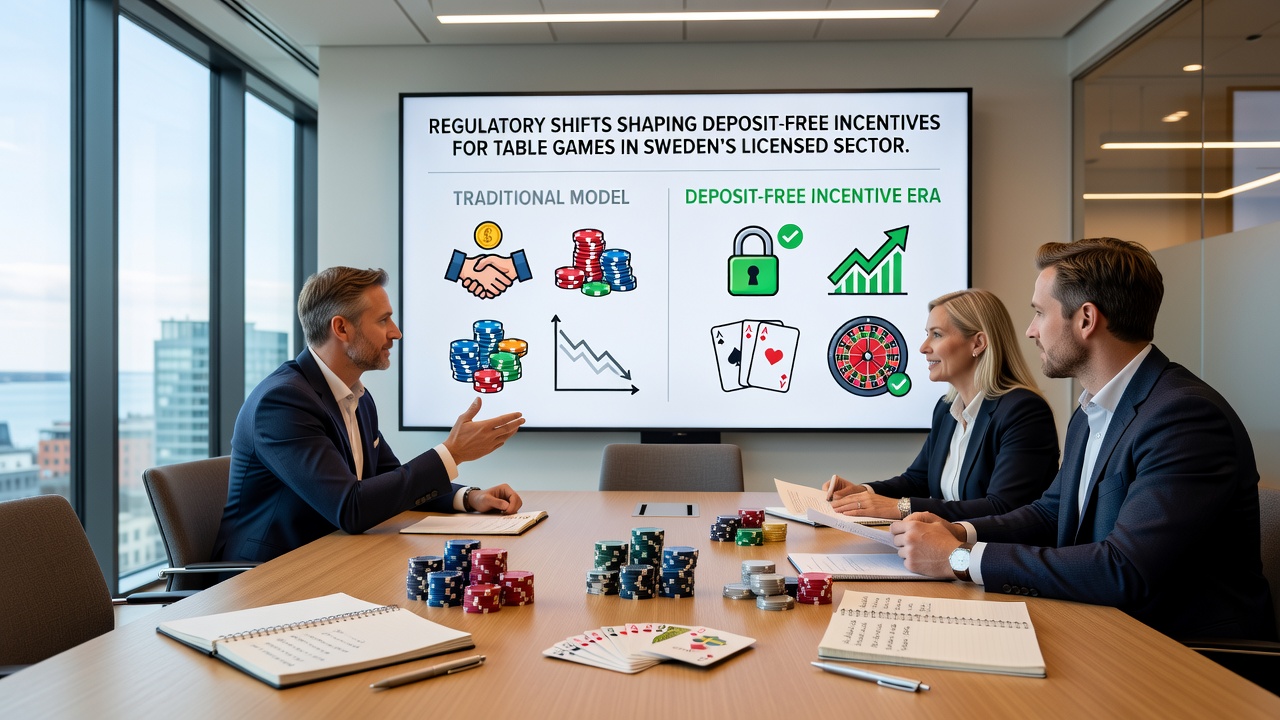
Starting in October 2026, new provisions will require that deposit-free incentives tied to table games display explicit contribution percentages at the point of offer, and operators must ensure these percentages appear both in promotional materials and within the game interface itself. The authority has also set maximum durations for unused credits, after which any remaining balance expires automatically. Licensees must submit quarterly reports detailing the volume and redemption rates of such incentives, allowing Spelinspektionen to monitor trends and intervene if patterns suggest excessive risk exposure for players.
These October measures build on earlier directives but introduce more granular technical specifications that affect backend systems. Companies that already invested in modular bonus engines have reported smoother transitions during testing phases, whereas others have needed additional development cycles to meet the new display and reporting standards.
Operational Adjustments by Licensed Operators
Licensed operators have responded by recalibrating their marketing calendars and revising bonus structures to align with the forthcoming rules. Several major platforms now separate table game incentives from slot-based offers during the user registration flow, and they apply distinct terms that reflect the updated weighting formulas. Industry reports compiled by European gaming associations show that marketing spend on table game promotions has shifted toward longer-term loyalty programs rather than one-time deposit-free offers.
Training programs for compliance teams have expanded to cover the October 2026 requirements, with emphasis on accurate game tagging and automated expiry handling. Those who have studied the transition process note that early adopters gained advantages in maintaining uninterrupted promotional campaigns once the rules took hold.
Player Experience and Market Data Trends
Player accounts registered after the initial 2019 licensing wave show varied engagement with deposit-free offers, and recent statistics indicate that table game participation rates have remained steady even as bonus conditions tightened. Government datasets from comparable markets in other regions suggest similar patterns where regulatory clarity around incentives coincides with stable or slightly increased session lengths for table games. Swedish operators continue to track these metrics internally and share aggregated findings with the authority during license renewals.
Academic papers published by researchers at Stockholm University have examined how different bonus formats influence time spent on specific game categories, and the findings contribute to ongoing policy discussions about responsible incentive design. The data helps regulators assess whether further refinements may be needed beyond the October 2026 updates.
Conclusion
The regulatory path Sweden has followed demonstrates a consistent focus on balancing market access with protective measures, and the October 2026 provisions represent the latest step in that progression for deposit-free incentives on table games. Licensed operators continue to adjust systems and reporting practices to meet the new specifications, while available statistics provide a basis for evaluating the effects over time. Spelinspektionen maintains its role in collecting compliance information and refining guidelines as needed, ensuring that the framework remains responsive to developments within the licensed sector.